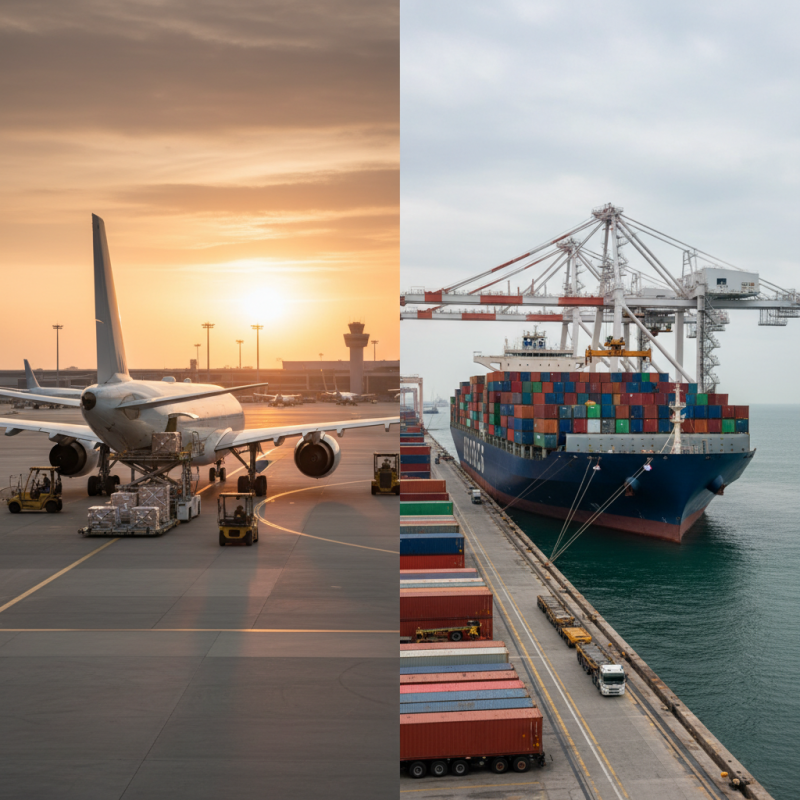
In international shipping, businesses often face a critical choice: air freight or sea freight? Understanding "what is the difference between air freight and sea freight" can guide this decision.
Air freight is fast but typically more expensive. It offers quicker delivery for urgent shipments, ideal for time-sensitive goods. However, it comes with limitations in weight and volume. Sea freight, on the other hand, is cost-effective for large shipments, making it suitable for bulky items. The trade-off is longer transit times, which may not suit all businesses.
Many factors influence the choice between these two options. While air freight provides speed, it might not be necessary for every shipment. Sea freight’s slower pace can lead to delays but often results in lower costs. Each method has its merits, yet finding the right balance requires careful consideration.
China Air Freight: Overview and Key Features
Air freight from China has become a crucial logistics option. With increasing demand for quick delivery, air shipping handles a significant volume of high-value goods. According to a recent report, air freight services account for about 35% of global trade by value, even though they only represent around 1% of total cargo volume. This discrepancy highlights the importance of air transport for valuable and time-sensitive shipments.
Key features of air freight include speed, flexibility, and worldwide reach. Transporting goods via air is often completed within 1-3 days, a stark contrast to sea freight, which can take weeks. However, air freight comes at a higher cost. Rates fluctuate based on seasons, fuel prices, and demand. A study indicates that air freight costs can be up to five times higher than sea shipping, which may deter businesses with lower budgets.
While air freight offers advantages, there are challenges as well. Delays can occur due to weather or airport congestion. Additionally, the environmental impact is a growing concern, as air transport generates more greenhouse gases per ton than sea transport. Companies must weigh these factors when choosing their logistics strategy. Balancing speed and cost often requires deep analysis and careful consideration.
Sea Freight in China: Overview and Key Features
Sea Freight in China plays a crucial role in international trade. As of 2022, approximately 90% of global trade volume relies on sea transport. This statistic highlights the importance of shipping goods over long distances. For businesses looking to maximize efficiency, understanding how sea freight works in China is essential.
Key features of sea freight include cost-effectiveness and capacity. Sea freight typically costs less than air freight, making it a popular choice. Reports indicate that shipping a container from China to Europe averages around $1,500 to $2,500, depending on various factors like demand and season. However, it can take weeks for containers to reach their destination. Delays may arise from port congestion or customs clearance. These factors can lead to inventory shortages or unexpected costs for businesses.
Another important aspect is the environmental impact. While sea freight is more fuel-efficient compared to air freight, it still contributes to carbon emissions. The shipping industry accounts for about 3% of global greenhouse gas emissions. This has prompted discussions on sustainable practices in the industry. Companies are now exploring eco-friendly alternatives. Yet, these changes often require time and investment, revealing a gap between immediate needs and long-term solutions in freight logistics.
Comparative Analysis: Air Freight vs Sea Freight Duration
Air freight and sea freight are two vital methods for transporting goods. The duration of each can significantly impact supply chains. Typically, air freight is much faster, delivering goods in a matter of days. Most shipments can reach their destination within 1 to 5 days. In contrast, sea freight may take weeks, often between 20 to 40 days depending on distance. This long timeline can lead to inventory shortages and missed opportunities in sales.
However, speed comes at a cost. Air freight tends to be much more expensive than sea freight. Businesses must weigh their products’ urgency against shipping costs. For instance, perishable goods may warrant the higher air rates. Yet, companies shipping bulky, slower-moving items might find sea freight more practical. While air cargo offers reliability in timing, delays can still occur due to weather or customs issues.
Deciding between the two requires careful consideration. Factors like urgency, cost, and product type play crucial roles. Some organizations may benefit from a hybrid approach, utilizing both methods. By understanding these dynamics, businesses can optimize their logistics strategies and enhance overall efficiency. Choosing the right mode of transport is more than just speed; it’s about aligning with business goals and managing risks effectively.
Cost Comparison: Air Freight and Sea Freight in China
When comparing air freight and sea freight in China, costs play a crucial role.
Air freight is generally more expensive due to its speed. It is ideal for time-sensitive shipments, but the price can be daunting.
Conversely, sea freight offers a cost-effective alternative for larger, less urgent shipments.
The cost savings can be substantial, making it appealing for bulk cargo.
Moreover, the pricing structure between the two methods differs.
Air freight charges are often calculated based on weight and volume. In contrast, sea freight charges depend on container size and shipping distance.
This complexity can be confusing for newcomers. It's essential to analyze specific needs before making a decision.
Choosing the right method hinges on various factors beyond cost. Compliance with regulations and transit times can influence final decisions.
Some may find hidden fees within air freight, while others may overlook handling times in sea freight.
Understanding these nuances will lead to better-informed logistics choices.
Choosing the Right Option: Factors to Consider in Shipping
When choosing between air and sea freight, several factors come into play. Cost, speed, and nature of goods are critical. According to a recent industry report, air freight is about five to seven times more expensive than sea options. However, it can reduce shipping time from weeks to days.
For businesses with perishable items or urgent shipments, air freight might be the best choice. Sea freight is ideal for bulk and non-urgent items. It can accommodate larger volumes. Interestingly, about 90% of global trade by volume is transported by sea, as it is often more economical for large shipments.
Tip: Consider the weight of your goods. Air freight has strict weight limits and dimensional restrictions. Even small items can incur high costs if they are deemed oversized.
Environmental impact is another concern. Air freight contributes significantly to carbon emissions. A study shows that air transport accounts for nearly 2% of global CO2 emissions. Businesses need to weigh this factor against their shipping needs.
Tip: Evaluate the trade-off between speed and sustainability. Sometimes, choosing a slower option can align better with eco-friendly goals.
FAQS
: Air freight delivers goods in 1 to 5 days, while sea freight can take 20 to 40 days.
Air freight costs more due to its speed, making it ideal for time-sensitive shipments.
Businesses should consider cost, speed, type of goods, and urgency when making their decision.
No, sea freight is generally not suitable for urgent shipments due to its longer delivery time.
Air freight costs are based on weight and volume, while sea freight costs depend on container size and distance.
Yes, some air freight options may have hidden fees that could impact total shipping costs.
Air freight contributes significantly to CO2 emissions, accounting for nearly 2% of global emissions.
Yes, choosing a slower shipping method may support eco-friendly goals despite longer delivery times.
Analyzing needs is crucial to avoid confusion and make informed logistics choices.
Yes, bulky and slower-moving items are often more practical to ship via sea freight.
Conclusion
When considering shipping options in China, it is essential to understand what is the difference between air freight and sea freight. Air freight is characterized by its speed and efficiency, making it ideal for time-sensitive shipments. It typically has a higher transportation cost, but offers rapid delivery, often within days. On the other hand, sea freight is more economical for larger shipments, albeit with a longer transit time that can span weeks.
In a comparative analysis, factors such as duration, cost, and the nature of the goods being shipped play a crucial role in selecting the best option. For instance, valuable or perishable items may necessitate air freight, while bulkier and less time-critical goods can be comfortably transported via sea freight. Ultimately, choosing the right shipping method involves weighing these key features and considerations against the specific needs of each shipment.

 DSERG Logistics