Global buying is no longer limited by distance. A retailer in Toronto may purchase furniture from Shenzhen, while a small manufacturer in Poland may source components from Vietnam. In these transactions, what is door to door logistics service? It is an integrated delivery model that moves goods from the seller’s facility to the buyer’s stated address. The provider usually coordinates pickup, export handling, international transport, customs documentation, import procedures, and final-mile delivery. One controlled journey.
This model matters because buyers increasingly value predictability, not transportation alone. The World Bank’s Logistics Performance Index 2023 collected feedback from more than 4,000 logistics professionals across 139 economies. Its findings connect reliable logistics with stronger delivery performance and supply-chain resilience. UNCTAD’s Review of Maritime Transport 2024 also confirms that shipping carries more than 80% of global merchandise trade by volume. Door-to-door coordination can therefore reduce handoff confusion across major transport networks.
The benefits are practical and measurable. Buyers may gain simpler communication, fewer administrative tasks, clearer shipment visibility, better delivery planning, reduced coordination costs, and more consistent customer service. A tracking update can show whether a carton has left the factory, cleared a port, or reached the local courier. That detail matters when inventory shelves are nearly empty. The provider may also combine transport modes and manage multiple documents through one service arrangement. Less chasing. More control.
Still, door-to-door logistics is not automatically cheaper or faster. A low quotation may exclude duties, storage, remote-area fees, or special handling. Service quality also depends on accurate product information and realistic delivery windows. This article examines the top 10 benefits for buyers, while recognizing that careful supplier checks, transparent terms, and shipment-level tracking remain essential.
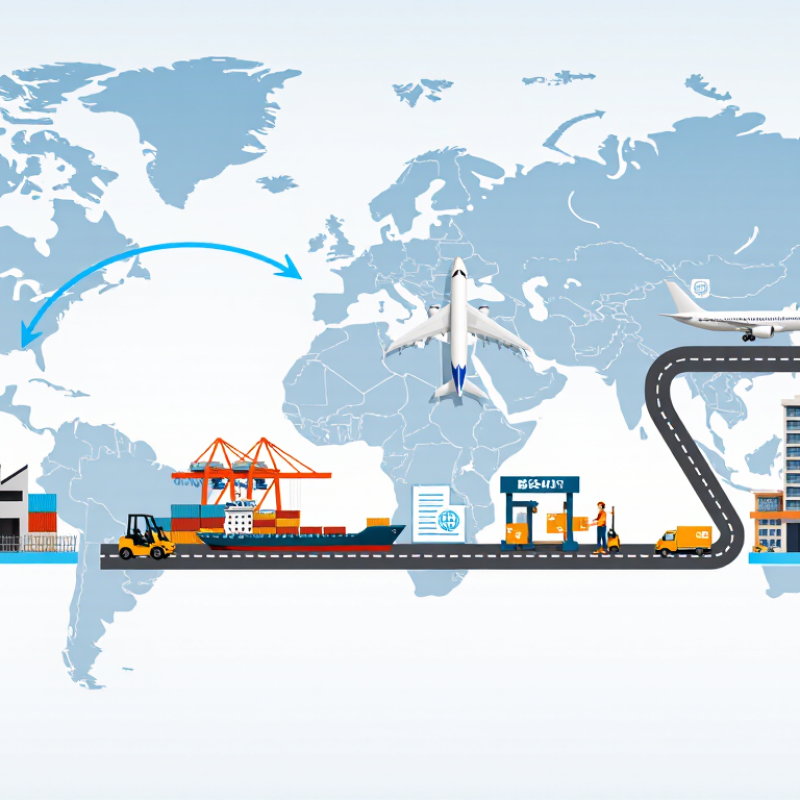
What Is Door-to-Door Logistics?
Door-to-door logistics moves a buyer’s shipment from the seller’s premises to the buyer’s specified address. It includes pickup, export documentation, international transport, customs coordination, and final-mile delivery. One logistics provider may manage these connected stages, while partners handle transport across borders.
This model matters because global supply chains involve many handoffs. The United Nations Conference on Trade and Development reports that over 80% of global merchandise trade by volume moves by sea. A door-to-door service can connect ocean freight with trucking, rail, or air transport. Buyers receive one shipment reference and clearer delivery milestones. That reduces routine communication and may reveal delays earlier. Still, “door-to-door” does not always mean every charge is included. Duties, taxes, storage, inspections, and remote-area fees require careful checking.
The World Bank’s 2023 Logistics Performance Index gathered evidence from 4,090 logistics professionals across 139 economies. Its findings highlight major differences in customs, infrastructure, tracking, and delivery reliability. Buyers should therefore request a written route, estimated transit time, liability terms, and a complete landed-cost breakdown. A practical test is simple: ask who controls the shipment when it reaches the destination country. If the answer is unclear, the service may be door-to-port with extra steps. I have seen schedules look excellent on paper, yet local delivery created the real delay. Reliability needs evidence, not confident wording.
| No. | Buyer Benefit | How Door-to-Door Logistics Works | Practical Buyer Value | Useful KPI to Monitor | Best Suited For |
|---|---|---|---|---|---|
| 1 | Greater Convenience | The shipment is collected from the seller or supplier and delivered directly to the buyer’s specified address. | The buyer does not need to arrange separate transport between ports, terminals, warehouses, and the final destination. | Number of logistics stages managed by the buyer | Online and offline retailers |
| 2 | Single Point of Contact | One logistics coordinator can manage pickup, transportation, customs-related communication, delivery scheduling, and status updates. | Fewer parties need to be contacted when the buyer requests an update or needs to resolve an exception. | Response time for shipment inquiries | Small and medium-sized buyers |
| 3 | Better Shipment Visibility | Tracking information can be consolidated across the shipment journey, including collection, transit, customs processing, and final delivery. | Accurate status information helps buyers plan inventory, staffing, customer communication, and receiving capacity. | Tracking-event coverage and update frequency | Inventory-based businesses |
| 4 | Simplified Customs Coordination | The logistics provider can coordinate shipping documents and communicate with customs brokers or other authorized parties, subject to the agreed service scope. | Clearer document responsibilities can reduce avoidable delays caused by missing or inconsistent commercial information. | Customs clearance delay rate and document error rate | Cross-border importers |
| 5 | More Predictable Transit Planning | The service coordinates multiple transport legs under one delivery plan with defined collection and destination requirements. | Buyers can schedule receiving labor, warehouse space, production inputs, or customer deliveries more effectively. | On-time delivery rate and transit-time variance | Manufacturers and wholesalers |
| 6 | Reduced Coordination Workload | Transport planning, delivery appointments, document collection, and exception communication can be handled within a coordinated service process. | Internal teams spend less time arranging routine freight movements and following up with multiple providers. | Staff hours spent per shipment | Businesses with lean logistics teams |
| 7 | Potentially Lower Total Logistics Cost | A coordinated shipment may combine transport, handling, documentation, and delivery services in one quotation, although the final price depends on route, cargo, and service terms. | Comparing one total landed logistics cost can be easier than adding several uncoordinated charges from different providers. | Total landed logistics cost per shipment or unit | Regular importers and exporters |
| 8 | Improved Delivery Reliability | A coordinated provider manages handoffs between transport stages and can escalate delays according to an agreed operating procedure. | Fewer unmanaged handoffs can make delivery performance easier to control, especially for time-sensitive orders. | Perfect order rate and failed-delivery rate | Time-sensitive supply chains |
| 9 | Flexible Service Options | Door-to-door services can be configured for different shipment modes, delivery locations, cargo sizes, handling requirements, and appointment needs. | Buyers can select a service level that matches shipment urgency, budget, packaging, and receiving conditions. | Percentage of shipments meeting service requirements | E-commerce and project cargo buyers |
| 10 | Easier Exception Management | When a shipment is delayed, damaged, held, or delivered unsuccessfully, the responsible logistics party can coordinate investigation, notification, and corrective action. | A defined escalation process helps buyers respond faster and maintain clearer records for claims or service reviews. | Exception-resolution time and claim-closure time | High-volume shipment operations |
Note: Actual transit times, costs, customs responsibilities, insurance coverage, and delivery performance depend on the route, shipment characteristics, applicable regulations, and the agreed service terms.
It connects the seller’s pickup point with the buyer’s final address. A coordinator manages collection, transport, customs processing, and local delivery. One shipment plan.
The buyer or seller books the shipment and provides cargo details. The coordinator checks the invoice, packing list, labels, measurements, and destination requirements. A collection appointment follows.
Cargo may travel by road, air, sea, rail, or several combined methods. The route depends on distance, cargo size, timing, and available capacity. Routes can change.
Clear product descriptions, accurate values, invoices, and packing lists support smoother review. Unclear information can cause inspections, extra questions, or storage charges. Details matter.
Most services provide updates for pickup, departure, arrival, clearance, and delivery. Ask whether tracking includes live location data or only milestone scans. Not every update is immediate.
No. It can simplify budgeting, but remote addresses, oversized cartons, storage, and extra handling may raise costs. Review fuel charges, taxes, delivery fees, and exclusions before booking. The lowest quote may disappoint.
Check coverage, transit estimates, tracking quality, insurance terms, customs support, and proof-of-delivery procedures. Ask who handles the shipment at each transfer point. Vague answers are warning signs.
Use firm cartons, foam corners, strong tape, and moisture protection when suitable. Fewer handoffs may reduce confusion and visible damage. Packing still needs care.
Usually not. Weather, congestion, inspections, limited capacity, and incomplete addresses can change delivery timing. Request realistic windows and exception alerts. Plans can fail.
It helps buyers who want one contact, scheduled delivery, simpler communication, and fewer transport decisions. A narrow delivery window can help arrange staff, storage space, or home access. Convenience has limits.
Door-to-door logistics is a complete shipping solution that moves goods from the seller’s location directly to the buyer’s chosen address. If you are asking “what is door to door logistics service,” it means the provider coordinates pickup, transportation, customs support when required, delivery, and final handover through one connected process. Buyers usually receive tracking updates while the shipment moves by road, air, sea, or a combination of transport methods.
The top benefits include convenience, fewer coordination tasks, clearer delivery responsibility, better shipment visibility, time savings, flexible delivery options, reduced handling, easier budgeting, improved reliability, and support for international purchasing. This service is especially useful for individuals, online retailers, small businesses, and buyers who lack logistics expertise. Before choosing a provider, buyers should check coverage areas, delivery estimates, pricing structure, tracking quality, insurance options, customer support, packaging requirements, and customs procedures. Comparing these factors helps ensure the service matches the shipment’s size, destination, urgency, and budget.

 DSERG Logistics